Want To Sell Or Let?
Start your journey with a free property valuation.

Property Valuation
"*" indicates required fields




Southampton’s rental market is sending mixed signals this spring, and reading them carefully matters for landlords deciding whether to hold, invest, or reprice.
Across the city and its surrounding areas, house rents are broadly holding up or rising, while the flat market is more fractured: some areas are growing steadily, others have pulled back sharply over the past twelve months. The picture across Woolston, Bitterne, Sholing, Ocean Village, and Eastleigh adds texture to that story, with some notable divergences worth understanding.

The going rate for a house in Southampton currently sits at £1,638 per month, up 2.4% over the past year. Flat rents average £1,047 per month, with a similar 2.5% rise over the same period. Those headline figures look steady, but the detail beneath them is more interesting.
At the smaller end of the house market, one-bedroom houses show the area average running well ahead of the typical rent, a handful of premium lets are pulling the figure upward significantly, while the typical one-bed house rents for considerably less. Two-bedroom houses, at £1,316 per month, have seen solid growth of around 8% over the year. Four-bedroom houses, at £1,893 per month, have also moved up meaningfully, with growth of over 11%. Three- and five-bedroom houses, by contrast, are marginally softer year-on-year.
In the flat market, the picture is more nuanced. One- and two-bedroom flats are running broadly flat to slightly down at the typical level, while larger flatted properties, particularly four- and five-bedroom units, have seen notable rent increases. This suggests the upper end of the flat market remains competitive, while the most common stock types face modest pricing pressure.
Bitterne is the standout performer on house rents across all the areas covered here. The going rate for a house is £1,470 per month, but the area average has risen by 17.6% over twelve months — the sharpest house rental growth of any area in this report. The typical three-bedroom house, which makes up the bulk of stock, rents at £1,465 per month and has grown around 2.5–3.5% over the year. The area average running so far ahead of the typical rent points to a smaller number of larger or higher-specification lets completing at significantly elevated rents.
Flat rents in Bitterne tell a different story. The going rate is £1,008 per month, but values have fallen 4.5% over the year. One- and two-bedroom flats have seen only marginal movement, suggesting the wider fall in the area average is driven by a shift in the mix of stock coming to market rather than a broad softening in demand.
Sholing’s rental market is one of the more consistent performers in this report. Houses average £1,423 per month, up 5.6% over the year. Flats average £972 per month, up 4.5% — making Sholing one of only two areas where both house and flat rents have risen together over the past twelve months. Two-bedroom flats have been particularly active, with growth of around 10–13% depending on the measure used, pointing to genuine demand for mid-sized flatted accommodation in this part of the city.
Woolston presents a clear split. House rents average £1,464 per month and have grown 5.5% over the year, with three-bedroom houses — the most common type — up around 6–7%. The flat market, however, has moved in the opposite direction: the going rate of £910 per month represents a 6.2% fall year-on-year at the area average level. Digging into the detail, one- and two-bedroom flats have actually seen modest growth, which suggests the overall fall is being driven by larger flat stock or a change in the composition of lets completing. Landlords with smaller flatted properties in Woolston should not read the headline decline as applying uniformly to their stock.
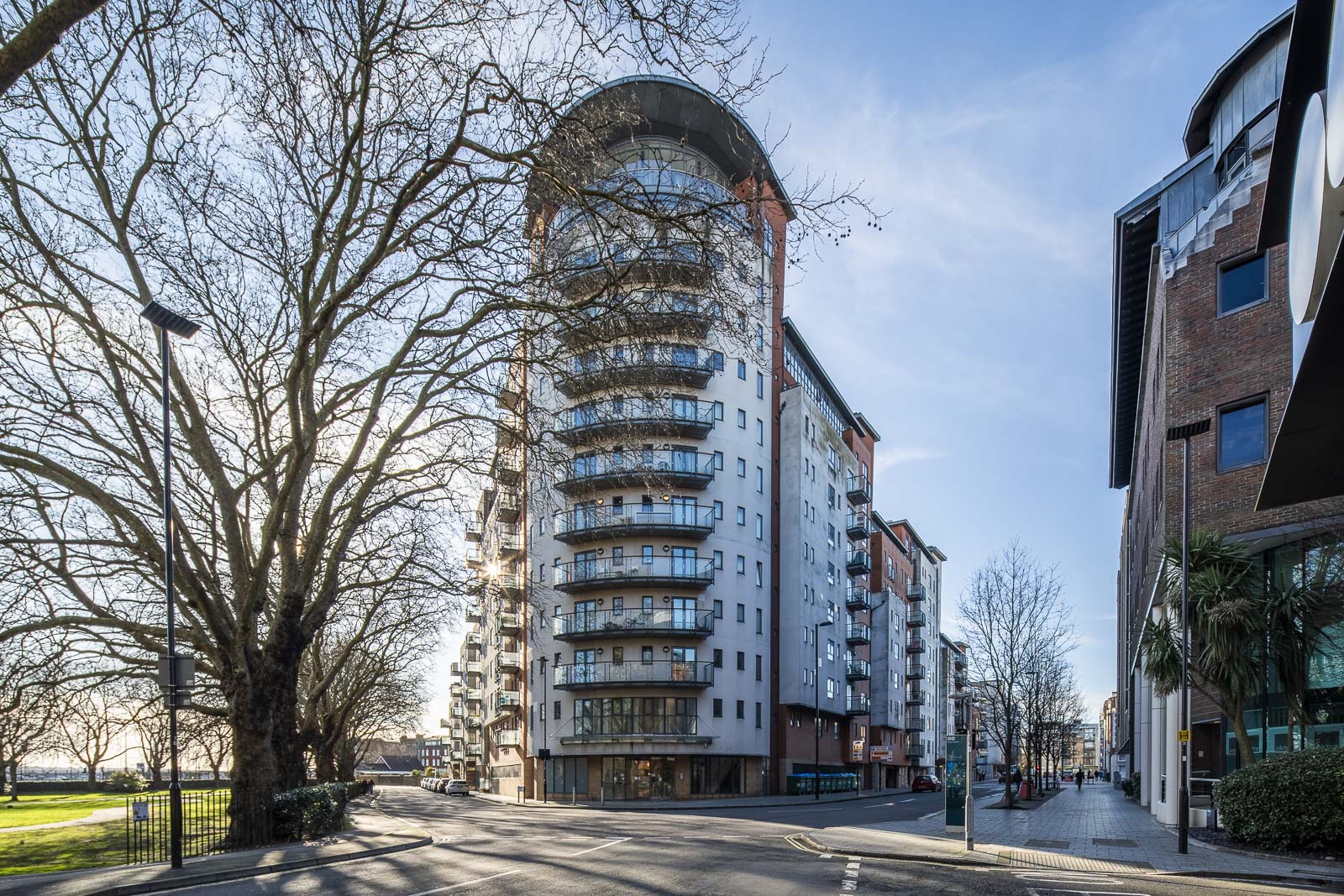
Ocean Village is the most distinctive market in this report and deserves careful reading. The going rate for a house is £1,965 per month and for a flat £1,228 per month — both the highest of any area covered. However, both have fallen sharply over the past year: house rents down 11.5%, flat rents down 12.3% at the area average level.
The detail matters here. Flat rents by bedroom size tell a quite different story: one-bedroom flats are up 9%, two-bedroom flats up around 9–10%, and three-bedroom flats up over 16%. The sharp fall in the overall flat average appears to be driven by a change in the mix of larger, higher-value lets completing — a smaller number of very high-value units that were active in the prior period appear less represented in the current figures. For landlords with one- or two-bedroom flats in Ocean Village, the underlying trend looks considerably more positive than the headline suggests.
House rents in Ocean Village are more genuinely mixed: three- and four-bedroom houses have seen some softening, particularly at the larger end, while one-bedroom lets are too few in number to draw firm conclusions.
Eastleigh, the only area outside the city boundary, shows the sharpest reversal between property types of any market here. House rents average £1,410 per month but have fallen 5.2% over the year — with four- and five-bedroom houses down notably, suggesting larger family lets are repricing in response to affordability limits. Flat rents, by contrast, average £1,140 per month and have risen 12% over the same period, making Eastleigh’s flat market the strongest-performing in this report by annual growth rate. Two- and three-bedroom flats are driving that growth, with two-beds up around 4–9% and the broader uplift pointing to sustained demand from tenants who may have been priced out of larger accommodation.
| Area | Typical house rent (pcm) | Typical flat rent (pcm) | House rent change (12m) | Flat rent change (12m) |
|---|---|---|---|---|
| Southampton | £1,638 | £1,047 | +2.4% | +2.5% |
| Bitterne | £1,470 | £1,008 | +17.6% | -4.5% |
| Sholing | £1,423 | £972 | +5.6% | +4.5% |
| Woolston | £1,464 | £910 | +5.5% | -6.2% |
| Ocean Village | £1,965 | £1,228 | -11.5% | -12.3% |
| Eastleigh | £1,410 | £1,140 | -5.2% | +12.0% |
Rental figures reflect a sample of recent listings and should be read as directional.
Taken together, the areas covered here reveal a consistent pattern: house rents are growing or holding across most of the city, while the flat market is dividing along size lines. Smaller flats — one- and two-bedroom units — are generally performing well or holding firm. Larger flatted stock and bigger houses are where the softening is most visible, and in several areas the headline fall in the area average is being driven by that upper-end movement rather than a broad-based decline.
Southampton’s broadly stable rental growth sits within a national context that remains supportive for landlords, even if the pace of increases has moderated from the peaks of 2022–23. HomeLet‘s rental index has consistently shown London and the South of England running ahead of the national average, with supply remaining the central constraint on rental market conditions across southern England.
Zoopla‘s rental market research has pointed to a gradual rebalancing between supply and demand nationally, with the rate of annual rent growth easing from double-digit levels but remaining positive in most regions. The South East and South Coast have continued to see above-average demand relative to available stock, which is consistent with the house rental growth seen across Southampton and its neighbouring areas.
For landlords, the legislative environment is the most significant external development of the current period. The Renters’ Rights Bill — which at the time of writing has completed its passage through Parliament and is moving toward implementation — will abolish Section 21 no-fault evictions and introduce a single system of periodic tenancies. The NRLA has been actively advising members on the transition, and landlords should be reviewing their tenancy management processes ahead of the Act coming into force. The abolition of fixed-term assured shorthold tenancies will require a different approach to tenancy renewals and rent reviews.
On energy efficiency, the government’s trajectory toward requiring rental properties to meet EPC Band C remains a medium-term obligation for landlords. While a firm implementation date for new tenancies has not yet been legislated, the direction of travel is clear, and properties currently rated D or below are likely to require investment. Landlords in Southampton and Eastleigh with older flatted stock — where EPC ratings tend to be lower — should be factoring improvement costs into their planning (gov.uk).
The OBR’s March 2026 forecast revised UK GDP growth down to 1.1% for the year, reflecting weaker business sentiment and subdued consumer confidence. For landlords with buy-to-let mortgages, the Bank of England’s base rate path remains a key variable: any further easing would reduce financing costs, but the OBR’s more cautious growth outlook suggests the pace of cuts is likely to be gradual (OBR, March 2026).
The rental supply picture across Southampton and the surrounding areas is unlikely to change materially in the near term. Constraints on new build delivery, continued landlord exits from the sector in response to tax and regulatory changes, and sustained inward migration to the city all point to demand remaining firm relative to available stock. This suggests house rents across most of the areas covered here are likely to hold or edge upward over the coming months, particularly in the two- to four-bedroom range where demand is strongest.
The flat market is more nuanced. Sholing and Eastleigh’s flat growth figures suggest that smaller flatted stock in accessible locations continues to attract strong tenant demand. Ocean Village’s underlying one- and two-bedroom flat performance, once the compositional effects at the top end are stripped out, points in a similar direction. The areas where flat rents have softened at the headline level — Woolston and Bitterne — appear to reflect mix effects more than a broad weakening of demand.
The NRLA has noted that landlord confidence has been affected by the legislative transition, with some landlords choosing to sell rather than navigate the new regulatory environment. If that trend continues locally, it would reduce available rental stock further — which, counterintuitively, tends to support rents even as it reduces choice for tenants.
For landlords operating across Southampton, Eastleigh, and the surrounding areas, current conditions suggest the market remains broadly favourable for well-maintained, appropriately priced properties. The areas with the strongest near-term indicators — Sholing, Bitterne for houses, and Eastleigh for flats — are worth watching closely.
If you’re a landlord reviewing your portfolio’s performance or considering a new let in Southampton or the surrounding areas, Lets Rent can provide a current rental valuation based on live local market conditions. Request a rental valuation or get in touch with the team to discuss what the spring 2026 market means for your property.
Start your journey with a free property valuation.
"*" indicates required fields
Then reach out to our friendly team today.
"*" indicates required fields

## Is It Time to Hand Over the Keys to a Letting Agent? Most landlords assume self-managing saves money. But with over 160 laws governin...
Southampton has a habit of surprising people. Forget the cruise terminals and football club — this is a city of genuine variety, from wat...

## Is Your Home Really Ready to Sell? Most sellers underestimate what proper preparation actually involves — and it costs them. The righ...