Landlord With A Property To Let?
Get a FREE rental valuation today

Property Valuation
"*" indicates required fields




The private rented sector in England is about to see one of the biggest legal changes in a generation. From 1 May 2026, the first phase of the Renters’ Rights Act 2025 comes into force, bringing major changes for landlords, letting agents and tenants.
For landlords, this means it is no longer enough to simply carry on with the same tenancy paperwork and processes as before. The way tenancies are created, managed and ended is changing, and it is important to make sure you are prepared.
At Let’s Rent & Let’s Sell Southampton, we are helping landlords across Southampton and the surrounding areas understand what the changes mean and what steps should be taken now.
The Renters’ Rights Act 2025 is new legislation designed to reform the private rented sector in England. The Government’s implementation roadmap confirms that the first phase of reforms starts on 1 May 2026 and applies to the private rented sector.
The main aim of the Act is to give tenants more security, improve standards across rental homes, and create clearer rules for landlords and agents.
For landlords, the changes are significant. They affect tenancy types, notices, rent increases, possession rules and the information that must be given to tenants.
One of the biggest changes is the abolition of Section 21 notices in the private rented sector. From 1 May 2026, landlords will no longer be able to end a tenancy using the current “no-fault” eviction process.
Instead, landlords will need to rely on updated Section 8 grounds where there is a legally recognised reason for possession, such as rent arrears, selling the property, or wanting to move back into the property.
Landlord tip:
Make sure your paperwork, rent records, inspection reports, maintenance records and communication history are well organised. Good record keeping will become even more important.
From 1 May 2026, the Government states that assured shorthold tenancies will be abolished and tenancies will move to a simpler periodic structure. In practice, this means tenancies will become rolling rather than being tied into a traditional fixed term in the same way.
This is a major change for landlords who are used to 6-month or 12-month fixed-term agreements.

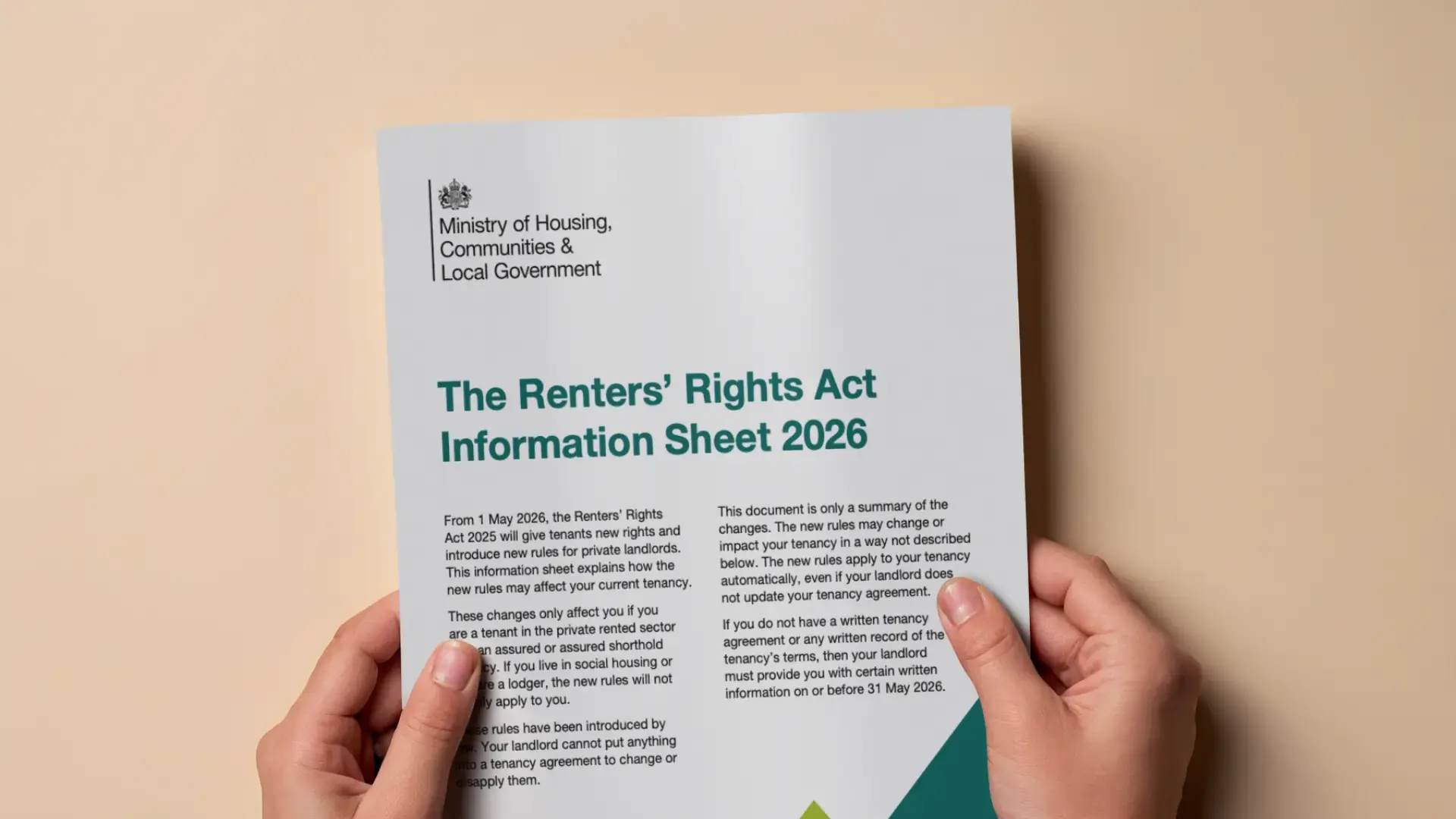
For tenancies created before 1 May 2026, landlords do not necessarily need to issue a brand-new tenancy agreement if there is already a written agreement in place. However, the Government roadmap says landlords must provide existing tenants with the official Renters’ Rights Act Information Sheet on or before 31 May 2026.
If a tenancy was agreed verbally, landlords will need to provide a written summary of the main terms by the required deadline.
Important landlord action:
You should keep clear evidence that the information sheet has been provided, such as email confirmation, recorded post, hand delivery notes or written acknowledgement.
For new tenancies created on or after 1 May 2026, landlords will need to provide certain written information to tenants. The Government has confirmed that this may be included within a written tenancy agreement, with the required details set out in secondary legislation.
This means landlords should avoid using old tenancy templates without checking they are suitable for the new rules.
Landlord tip:
Do not assume your old tenancy agreement is still fit for purpose. It is worth reviewing your documents before issuing them to new tenants.
The new rules are also expected to change how rent increases are handled. Government and sector guidance has highlighted that landlords should prepare for changes around rent increases and the formal process for proposing them.
This makes it even more important for landlords to understand the local rental market and keep evidence of comparable rents.

With only a few days to go, landlords should be reviewing their current position now.
Before the changes come into force, you should consider:
Tenancy paperwork
Check whether your tenancy agreements are up to date and suitable for the new rules.
Existing tenants
Make sure you know which tenants need to receive the official Renters’ Rights Act information and keep proof that this has been provided.
Compliance documents
Review your EPC, Gas Safety Certificate, EICR, deposit protection, prescribed information and Right to Rent records.
Rent records
Ensure rent statements and arrears records are accurate and easy to access.
Maintenance history
Keep clear notes of reported maintenance, contractor visits, invoices, inspection reports and tenant communication.
Possession planning
If you may need possession of a property in the future, make sure you understand the updated legal grounds and notice requirements before taking action.
The Renters’ Rights Act does not remove the need for landlords to protect their investment. However, it does mean landlords will need to be more organised, proactive and compliant.
Clear communication, regular inspections, accurate records, correct notices and compliant paperwork will all become increasingly important.
For landlords managing properties themselves, this may feel like a lot to keep on top of. For landlords using a professional letting agent, it is important to make sure your agent is actively preparing for the changes and keeping you updated.

At Let’s Rent & Let’s Sell Southampton, we manage properties across Southampton and the surrounding areas, helping landlords stay compliant while protecting their rental income and property.
Our lettings and property management services can support landlords with:
Fully managed property services
Day-to-day management, tenant communication, rent collection, maintenance coordination, inspections and compliance support.
Tenancy documentation
Helping ensure the correct paperwork and information is issued at the right time.
Landlord compliance guidance
Supporting landlords with key requirements including deposit protection, safety certificates, Right to Rent checks and ongoing property management.
Rental market advice
Providing local rental guidance based on current market conditions across Southampton and nearby areas.
Tenant communication
Helping keep communication professional, clear and properly recorded.
The Renters’ Rights Act is coming into force on 1 May 2026, and landlords should not leave preparation until the last minute.
Whether you own one rental property or a larger portfolio, now is the time to review your tenancy paperwork, compliance documents and management processes.
If you are unsure whether you are ready, our team is here to help.
Contact Let’s Rent & Let’s Sell Southampton today for friendly, professional landlord advice.
Get a FREE rental valuation today
"*" indicates required fields
Then reach out to our friendly team today.
"*" indicates required fields

# Have Portfolio Landlords Really Outgrown Property Management? There's a growing assumption in the lettings industry that once a landlo...

As November comes to an end, the UK property market reveals key trends that shape buying, selling, renting, and letting activities. Shifts

If you want to sell a property during a fixed-term tenancy, you don’t have to wait until the agreement ends before going